
There is a lot happening in Kansas City’s biomanufacturing community, and it is best understood on the ground. Companies are investing, talent is growing, capabilities are expanding, and industry leaders are working together to build an ecosystem that can support the next generation of biomanufacturing. It’s momentum you can experience firsthand, and few people understand it better than John Bucksath, CEO and board member of KCAS Bio. With more than 30 years of experience in the CRO industry, leading both technical and management teams, he is responsible for the company’s vision and strategic direction.
Read on for a Q&A with John.
1.) What does Kansas City’s current capacity in biologics – in talent, infrastructure, partnerships – look like today that most people outside the region don’t realize?
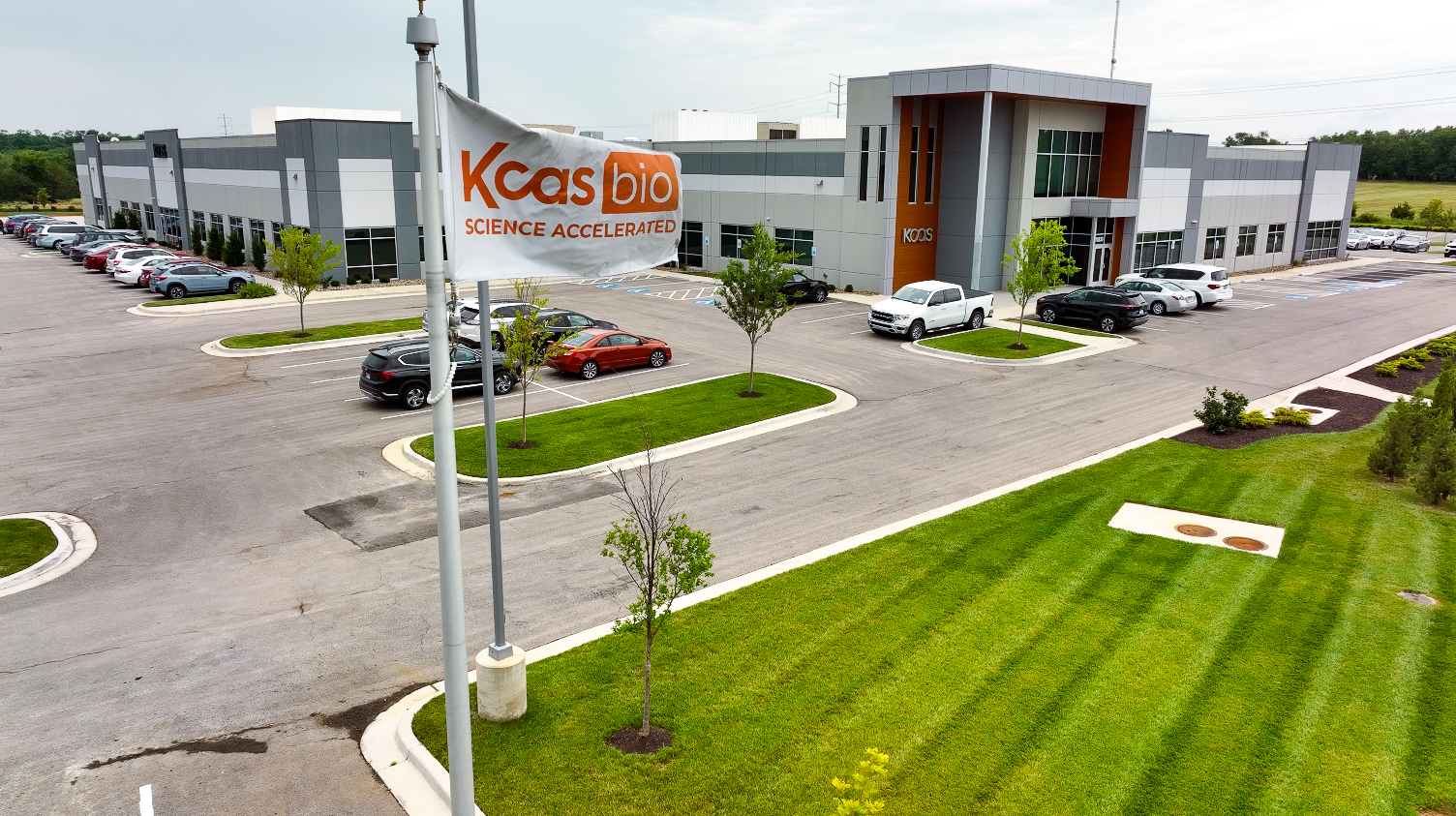
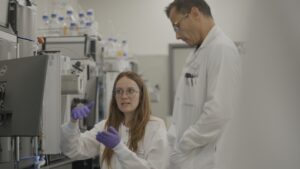
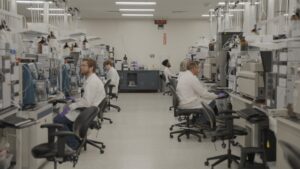
What is probably underappreciated outside Kansas City is the density and breadth of the infrastructure that is located in the region. The KC region has a significant concentration of CROs, CDMOs, pharmaceutical manufacturers, research institutions and specialized scientific talent supporting the drug-development continuum, along with four R1 universities and major research assets that continually strengthen that talent base. KC BioHub has brought more than 115 organizations together around that ecosystem, creating an opportunity to connect capabilities that historically may have operated more independently. At KCAS Bio alone, our Kansas City-area operation includes a 70,000-square-foot laboratory and approximately 300 employees supporting drug developers around the world, so this is not simply an ecosystem being envisioned for the future; there is meaningful scale here today.
2.) Where do you see the greatest room to grow in our bioanalytics and testing capabilities to help KC lead globally, and what momentum is already building there?
One of the greatest opportunities is to continue building capabilities around the increasingly complex therapies coming through pharmaceutical pipelines – biologics, oligonucleotides, cell and gene therapies, ADCs and other advanced modalities – because these programs require much more sophisticated development strategies than traditional approaches alone can provide. At the same time, technologies such as high-parameter flow cytometry, high-resolution mass spectrometry, molecular methods, automation, and appropriately applied AI are changing both what laboratories can measure and how efficiently they can deliver high-quality data.
Kansas City already has an unusually strong foundation on which to build those capabilities, and the new investment surrounding KC BioHub should help accelerate that momentum. Initiatives such as the SCALE Center and EPIC are particularly encouraging because they are designed to connect innovation, workforce development, drug-development services, and manufacturing rather than viewing each as a separate part of the ecosystem. The opportunity for Kansas City is to become known not only for manufacturing biologics, but as a place where sponsors can access sophisticated scientific capabilities across much more of the development lifecycle.
3.) Picture the KC BioHub region a decade from now; how has the bio services sector evolved and how has it impacted healthcare?
Ten years from now, KCAS Bio would like to see Kansas City recognized globally as a place where a promising therapeutic can move efficiently from discovery through development, testing, scale-up and manufacturing within a highly connected regional ecosystem. The bio services sector will have become even more capable and technologically advanced, but also more integrated – with CROs, CDMOs, academic institutions, innovators, manufacturers and workforce organizations collaborating instead of operating as isolated pieces of the development process. That matters because reducing fragmentation can ultimately reduce development risk and shorten the path between scientific discovery and the patient who needs a new therapy. KC BioHub’s ambition to create 10,000 good jobs and more than 100 new biotechnology companies is important economically, but the larger measure of success will be whether innovations developed and supported here result in medicines that improve and save lives around the world.
4.) Why is Kansas City becoming a destination of choice for pharmaceutical biomanufacturing and bio services?
Kansas City has an unusual combination of attributes that is difficult to replicate: a strong existing base of pharmaceutical and biologics companies, an established CRO and CDMO community, significant research institutions, a growing scientific workforce, and a culture in which companies and institutions are increasingly willing to collaborate. The region is already a Top 3 U.S. metro in pharmaceutical manufacturing concentration and has deep experience across both human and animal health, giving it a broader biologics foundation than many people realize.
There is also a larger industry shift working in Kansas City’s favor. Drug development has become increasingly global, but pharmaceutical companies are simultaneously placing greater emphasis on supply-chain resilience, intellectual-property protection, access to specialized expertise, and dependable domestic development and manufacturing capacity. Modern CROs are increasingly strategic scientific partners rather than simply outsourced laboratories, and regions that can combine talent, infrastructure, technology and collaboration will have an advantage. Kansas City already possesses many of those ingredients; the work underway through KC BioHub is helping connect and amplify them in a way that can compete on a global scale.
About KCAS Bio:
KCAS Bio is a global contract research organization (CRO) specializing in bioanalytical and biomarker services that support drug development from late discovery through clinical development, and post-commercialization development. With deep expertise in pharmacokinetics, biomarkers, immunogenicity, molecular biology, flow cytometry, and both small- and large-molecule bioanalysis across an increasingly complex range of therapeutic modalities, KCAS Bio is one of the most capable providers in the industry. Our scientists work with both emerging biotechnology companies and global pharmaceutical organizations, providing the scientific expertise, regulatory rigor, and laboratory capacity needed to generate reliable, decision-ready data. Headquartered in the Kansas City region, KCAS Bio has expanded into a global organization with geographic reach in the EU, Australia and China, while maintaining the high-touch, collaborative approach that has been central to our company since its founding here in 1979.